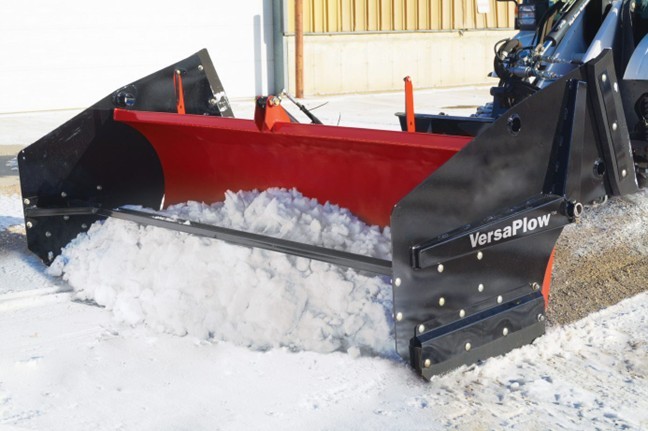
Snow pusher setups look like overkill to some contractors, until they start servicing large commercial lots. That’s usually when the math changes. What used to take one truck an hour suddenly stretches into two. Crews fall behind. Fuel costs creep up. And the same property that seemed profitable starts eating into margins. A snow plow dealer is here to help!
Large lots expose inefficiencies fast. If your snow plows, route planning, or workflow isn’t dialed in, you feel it immediately.
Where time gets lost on big properties
Most delays don’t come from one major issue. They come from small inefficiencies stacking up across the job.
Things like:
- Too many passes to clear open space
- Inefficient push patterns
- Equipment that can’t carry enough snow per pass
- Operators constantly repositioning
On a small lot, that might cost a few extra minutes. On a large site, it can double your time.
That’s why equipment choice matters more as property size increases.
Why traditional plows struggle on large lots
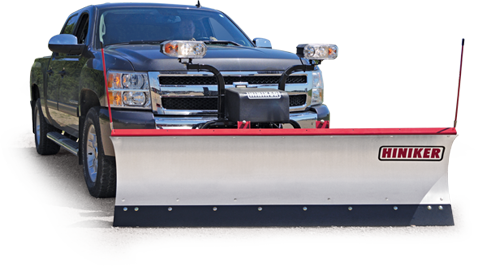
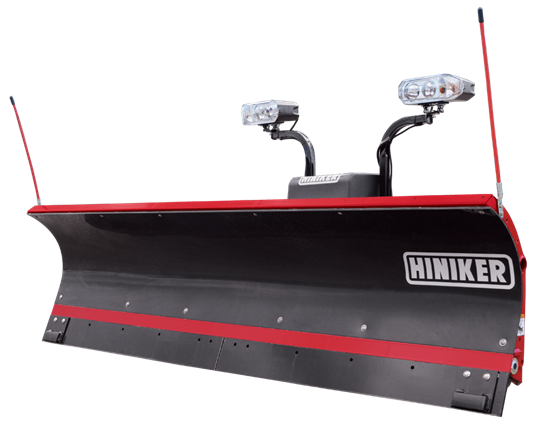
Standard plows are built for versatility. They can handle a wide range of jobs. But on large, open areas, they start to show limitations.
You’re pushing snow off to the side instead of moving it efficiently across the lot. That leads to:
- More passes
- Longer push distances
- Increased fuel use
It’s not that they don’t work. It’s that they weren’t designed for maximizing efficiency on wide-open surfaces.
Contractors who scale into larger accounts often realize this after a season or two.
How Snow Pusher setups change the game
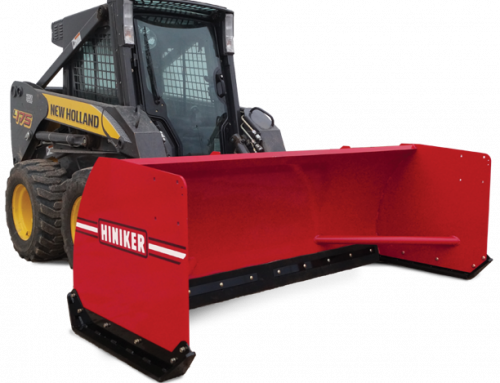
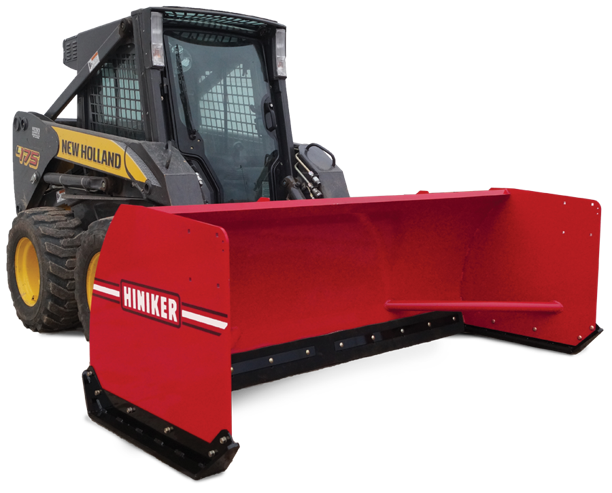
Pushers are designed to move volume.
Instead of angling snow off to the side, they contain it and carry it forward. That means fewer passes and more snow moved per trip.
On large lots, that difference is noticeable right away. What used to take multiple angled passes can often be handled in fewer, more direct pushes.
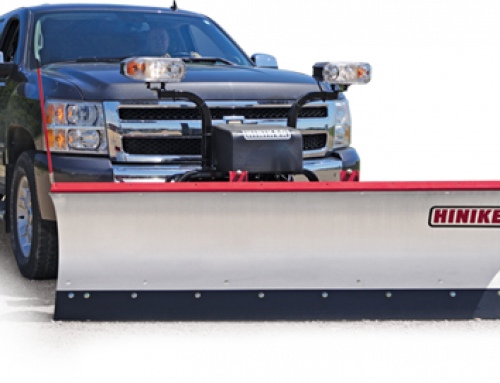
Contractors working with experienced snow plow dealers often transition to pushers once their route includes more open commercial properties. It’s not about replacing every plow it’s about using the right tool where it matters most.
Route design plays a bigger role than expected
Equipment is only part of the equation.
How you move through a property affects your total time just as much.
Common mistakes include:
- Starting in the wrong area
- Creating unnecessary overlap
- Pushing snow too far before stacking
- Not planning for where snow will go as the storm progresses
Large lots need a plan before the storm starts. Otherwise, operators end up reacting instead of executing.
That’s where experienced crews separate themselves. They treat each property like a system, not just a space to clear.
Matching equipment to property type
Not every large lot is the same.
Retail centers, industrial yards, and office complexes all have different layouts and priorities.
Some require tight maneuvering around islands and curbs. Others are wide open with minimal obstacles.
Contractors who rely only on one type of equipment often struggle to adapt.
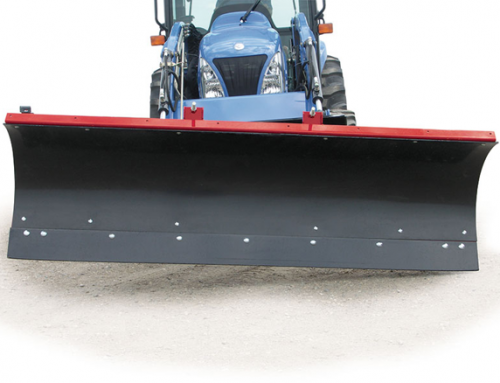
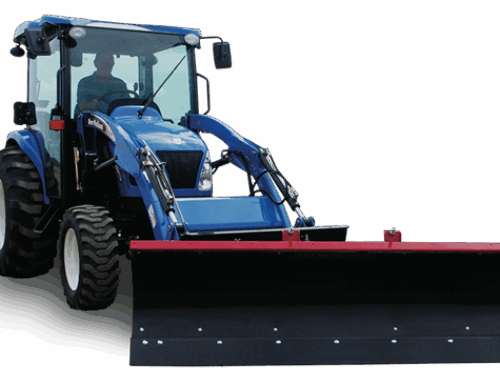
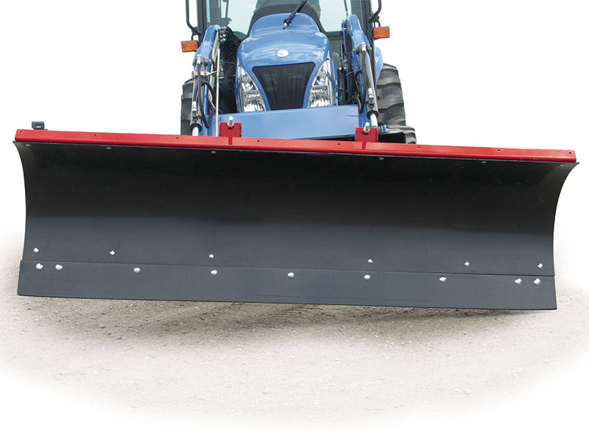
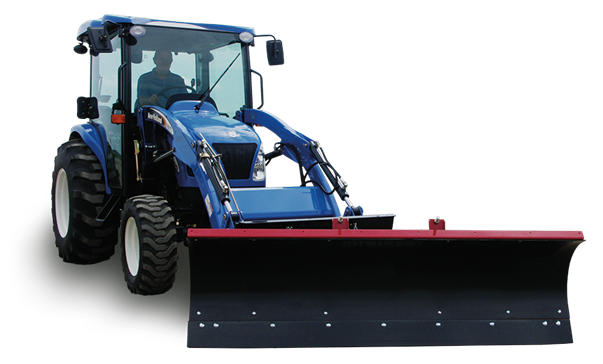
This is where setups like mounted snow pushers come into play. They’re not meant for every job, but on the right property, they drastically improve efficiency.
Mixing equipment types across your fleet gives you more flexibility across different accounts.
The hidden cost of extra passes
Every extra pass costs more than just time.
It increases:
- Fuel consumption
- Wear on equipment
- Operator fatigue
Over a full season, those costs add up.
A route that takes 20% longer than it should doesn’t just reduce profit. It limits how many accounts you can handle.
That’s often where contractors hit a ceiling. They can’t grow because their current setup isn’t efficient enough.
Support equipment matters too
Plowing is only part of the job. Deicing and finishing work also take time.
If your spreader setup isn’t keeping up, you’re adding delays at the end of each property.
Contractors who upgrade to better truck plows and matching spreader systems often see improvements across the entire workflow, not just the plowing phase.
It’s about keeping every part of the process moving at the same pace.
Operator experience makes a difference
Even the best snow pusher equipment won’t fix poor technique.
Experienced operators:
- Choose better push patterns
- Reduce overlap
- Adjust based on snow conditions
- Know when to switch strategies mid-job
Training matters, especially on large lots where mistakes scale quickly.
A newer operator might take significantly longer on the same property simply due to inefficiency.
Why some contractors fall behind every storm
It usually comes down to a combination of factors:
- Undersized equipment
- Poor route planning
- Lack of operator training
- Trying to use one setup for every job
Each issue on its own might seem manageable. Together, they create consistent delays.
That’s when contractors start feeling like they’re always behind, no matter how early they start.
Fixing the problem without adding more trucks
A common reaction is to add more equipment or hire more drivers.
That can help, but it also increases overhead.
In many cases, improving efficiency with the right setup and better planning has a bigger impact.
Contractors who reassess their equipment mix and workflow often find they can handle more work with the same number of trucks.
The real goal: more work in less time
Large lots don’t have to be a problem. They can be some of the most profitable accounts if handled correctly.
The key is reducing wasted movement and maximizing what each pass accomplishes.
That’s where the right equipment, planning, and execution come together.
Get those aligned, and large properties start working in your favor instead of against you.
FAQs
Why do large lots take longer than expected to clear?
Usually because of inefficient push patterns and equipment that isn’t built for moving large volumes of snow in fewer passes.
Are snow pushers better than plows for big properties?
For open areas, yes. They move more snow per pass and reduce the number of trips needed.
Should I change equipment or just improve my process?
Often both. Better planning helps, but the right equipment can significantly reduce time on large lots.

Reach out to us online at Hiniker or contact us today by calling (800) 433-5620 to find out more about the premium snow removal products we offer.
We have been a proud Minnesota-based manufacturer since 1995. We offer the highest quality salt & sand spreaders, snow plows, skid steers, truck plows, accessories, and more!
Our equipment at Hiniker is built to enable the operator to work as efficiently as possible.
You can also follow us on Facebook for the latest news regarding Hiniker’s premium equipment and accessories.