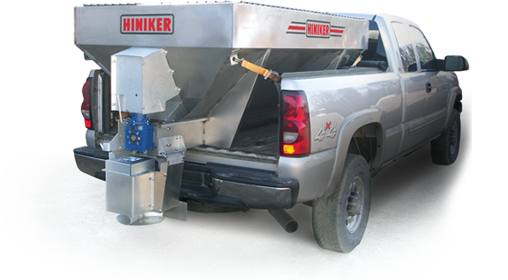
Salt spreaders are one of those purchases that seem straightforward until you actually start running routes. Then the questions hit fast. Why does one truck run out halfway through the route? Why does another struggle to spread evenly? Why are you stopping more than expected?
Choosing the right setup isn’t just about capacity or price. It’s about how your route behaves in real conditions. Distance between stops, property size, material type, and truck class all play a role in whether your spreader helps you move faster or slows everything down.
Matching Salt Spreaders to your actual route
Most contractors underestimate how much route design affects equipment choice.
If you’re running tight commercial lots with frequent stops, you need a setup that gives you control. Quick adjustments, consistent flow, and easy operation matter more than sheer capacity. You’re spreading often, not just dumping material.
If your route includes long stretches between applications, industrial parks, roadways, or larger properties, capacity starts to matter more. Fewer reloads means less wasted time.
That’s where many buyers go wrong. They either oversize and carry unnecessary weight or undersize and spend half the night reloading. A good starting point is simple: how many stops, how much material per stop, and how far between refills.
Truck type changes everything
Not every truck can handle every spreader.
Half-ton pickups are limited in payload. Overloading them doesn’t just affect performance, it affects safety and wear on the vehicle. For those setups, smaller hopper or tailgate units usually make more sense.
Three-quarter ton and one-ton trucks open up more options. You can run larger hoppers, carry more material, and stay on route longer without stopping.
Contractors running heavier routes often move toward setups recommended by experienced salt spreader dealers. Not because they’re upselling, but because they’ve seen what happens when a truck is mismatched with its equipment.
The truck and spreader should work together. If one is limiting the other, you’ll feel it every storm.
Tailgate vs hopper: what actually works better?
Tailgate units are popular for a reason. They’re lighter, easier to install, and work well for smaller routes or residential work. If your stops are quick and your material use is moderate, they can be a solid choice.
But they come with limits. Capacity is smaller. Reload frequency goes up. And on larger routes, that becomes a problem fast.
Hopper spreaders carry more material and reduce reload trips. That matters when you’re trying to finish a route before conditions change or before the next storm cycle starts.
Many contractors who expand their routes eventually outgrow tailgate units. That’s when they start looking at larger sand & salt spreaders for better coverage and efficiency. The right choice depends on how much ground you need to cover in a given window.

Material type affects performance
Not all salt behaves the same. Bulk salt, bagged salt, treated salt, and mixes all flow differently.
Some spreaders handle certain materials better than others. Poor flow leads to clogs, uneven distribution, and wasted time trying to fix issues mid-route.
Accessories can help here. Vibrators, upgraded controls, and better feed systems can improve consistency. Contractors who invest in the right salt & sand spreader accessories often see smoother operation across varying conditions.
It’s not just about what you’re spreading. It’s about how well your equipment handles it when temperatures drop and moisture creeps in.
Control systems matter more than expected
Being able to adjust spread rate quickly can save material and improve coverage. Basic systems get the job done, but more advanced controls allow for better precision. That matters when switching between small lots and larger surfaces or when trying to avoid overapplication.
Wasting material eats into profit. Under-applying leads to callbacks. Contractors who run mixed routes tend to benefit most from better control systems. They allow you to adapt without stopping or guessing.
Planning for growth
A lot of contractors buy equipment based on what they’re doing right now. That works short term, but it can create problems as routes grow.
If you’re planning to add accounts, take on larger properties, or reduce the number of trucks you’re running, your spreader choice should reflect that.
This is where flexibility matters. Some setups can scale with your business. Others get replaced quickly once your workload increases.
Contractors often look at different configurations through sand spreader dealers to compare how setups will perform under heavier use. Even if you’re focused on salt, understanding broader equipment options can help avoid buying too narrowly.
Reducing downtime during storms
The best spreader is the one that keeps working. Clogs, motor issues, wiring problems, these don’t just slow you down. They stop your route completely until you fix them.
Build quality plays a big role here, but so does maintenance and setup. Simple things like proper material storage, regular checks, and keeping components clean can prevent a lot of mid-storm problems.
Still, some units are built to handle stress better than others. Contractors who’ve dealt with breakdowns tend to prioritize reliability over upfront savings the next time around.
What most contractors wish they knew earlier
The biggest lesson usually comes after a season or two.
Equipment choice affects everything, route time, fuel use, labor efficiency, and even customer satisfaction. A spreader that seems “good enough” can quietly limit how much work you can take on.
On the flip side, the right setup can help you finish faster, take on more accounts, and reduce stress during storms.
That’s why experienced contractors spend more time thinking through their routes before buying.
So what should you choose?
Start with your route. Not the product.
Look at how much material you use, how often you spread, how far you travel, and what your truck can handle. From there, narrow down the type and size that fits those conditions.
A spreader should match your workload, not fight it.
Get that part right, and everything else gets easier.
FAQs
What size salt spreaders do I need for a pickup truck?
It depends on your truck’s payload and your route size. Half-ton trucks usually pair with smaller units, while one-ton trucks can handle larger hopper setups.
Are tailgate spreaders good for commercial work?
They can be, especially for smaller routes. Larger commercial operations usually move toward hopper spreaders for better capacity and fewer reloads.
How do I prevent my spreader from clogging?
Keeping material dry helps a lot. Using the right accessories and choosing a spreader designed for your material type also reduces clogging issues.

Reach out to us online at Hiniker or contact us today by calling (800) 433-5620 to find out more about the premium snow removal products we offer.
We have been a proud Minnesota-based manufacturer since 1995. We offer the highest quality salt & sand spreaders, snow plows, skid steers, truck plows, accessories, and more!
Our equipment at Hiniker is built to enable the operator to work as efficiently as possible.
You can also follow us on Facebook for the latest news regarding Hiniker’s premium equipment and accessories.