Choosing spreading equipment is not just about capacity or price. It is about how the equipment fits into real-world snow operations.
Two of the most common options are tailgate-mounted spreaders and hitch-mounted spreaders. On paper, they do similar things. In practice, they behave very differently depending on vehicle setup, material type, and how often equipment is swapped.
Understanding when a tailgate spreader makes more sense than a hitch-mounted unit helps avoid buying equipment that works against the operation instead of supporting it.
Spreader mounting affects daily workflow
Snow operations are time-sensitive. Equipment that is difficult to mount, remove, or adjust slows everything down.
Tailgate and hitch-mounted spreaders change how vehicles are used day to day.
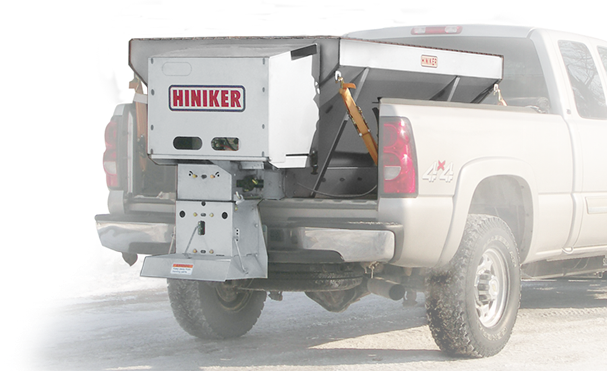
Tailgate-mounted units attach directly to the rear of the truck bed. Hitch-mounted units connect at the receiver and sit lower to the ground.
Neither is universally better. Each solves a different problem.
When tailgate spreaders are the better choice
Tailgate spreaders work well when flexibility matters.
They are typically lighter and easier to remove, which makes them practical for trucks that serve multiple roles outside of snow season.
For smaller routes or lighter-duty work, a tailgate spreader allows operators to carry material without permanently dedicating the vehicle to spreading.
They are also easier to store when not in use, which matters for operations with limited space.
Tailgate spreaders suit lighter material loads
Because tailgate units mount higher, they are better suited for lighter material volumes.
They work well with salt and treated materials that flow easily. Heavy sand loads can stress smaller tailgate systems, especially when moisture is present.
This makes tailgate units a common choice for operators relying primarily on salt spreaders rather than sand-heavy mixes.
Used within their limits, tailgate spreaders perform reliably and efficiently.
Hitch-mounted spreaders handle heavier work
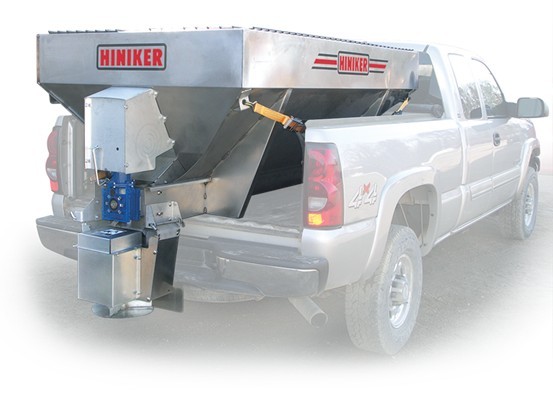
Hitch-mounted units sit lower and are designed to carry heavier loads.
A receiver hitch spreader is often chosen when sand or mixed material is used regularly. The lower mounting point improves stability and reduces strain on the truck.
These units also allow easier loading since material does not need to be lifted as high.
For larger routes or longer shifts, hitch-mounted spreaders reduce refilling frequency and operator fatigue.
Vehicle configuration influences the decision
Not every truck is suited for every mounting style.
Bed length, tailgate design, hitch rating, and electrical setup all affect compatibility.
Working with a salt & sand spreaders dealer helps identify which option fits the vehicle without modification.
Improper mounting can lead to clearance issues, wiring problems, or uneven spreading.
Material choice often decides the outcome
The type of material being spread often determines which mounting style makes sense.
Salt flows easily and places less strain on drive components. Sand is heavier and more abrasive.
Operations using sand & salt spreaders frequently lean toward hitch-mounted units to handle mixed material more consistently.
Pure salt operations often prefer tailgate units for their simplicity and flexibility.
Maintenance considerations differ
Tailgate spreaders are simpler. Fewer moving parts. Easier access for cleaning.
Hitch-mounted units are heavier-duty but require more attention to bearings, motors, and corrosion protection.
Both benefit from regular cleaning and proper storage, but maintenance routines differ.
Understanding those differences helps set realistic expectations for upkeep.
Accessories affect performance for both styles
Regardless of mounting style, accessories matter.
Controllers adjust application rate. Covers protect material. Spinner designs influence spread pattern.
Choosing the right salt & sand spreader accessories improves consistency and reduces material waste.
Skipping accessories often leads to uneven results, regardless of mounting style.
Cost is not the deciding factor alone
A tailgate spreader often cost less upfront. Hitch-mounted units usually cost more.
That price difference reflects capacity, durability, and intended use.
Choosing based on cost alone can lead to equipment that does not match the workload.
Matching the spreader to the job usually provides better value over time.
Why dealer guidance matters here
The difference between tailgate spreader and hitch-mounted spreaders is not always obvious.
Dealers see how equipment performs across many operations. They understand failure points and common mismatches.
That insight helps operators avoid equipment that looks good on paper but fails in practice.
Making the right choice upfront saves time later
Swapping equipment mid-season is expensive and disruptive.
Understanding when a tailgate spreader makes sense and when a hitch-mounted unit is better helps lock in the right setup early.
That preparation keeps snow control predictable when conditions are worst.
FAQ
What is the main difference between tailgate and hitch spreaders?
Tailgate spreaders are lighter and more flexible. Hitch spreaders handle heavier loads.
Are tailgate spreaders good for sand?
They can be, but they are better suited for salt and lighter materials.
When should a hitch-mounted spreader be used?
When heavier material or larger routes are involved.
Do both types use the same accessories?
Some accessories overlap, but compatibility varies by model.
Should a dealer help decide between the two?
Yes. Vehicle setup and material choice matter.

Reach out to us online at Hiniker or contact us today by calling (800) 433-5620 to find out more about the premium snow removal products we offer.
We have been a proud Minnesota-based manufacturer since 1995. We offer the highest quality salt & sand spreaders, snow plows, skid steers, truck plows, accessories, and more!
Our equipment at Hiniker is built to enable the operator to work as efficiently as possible.
You can also follow us on Facebook for the latest news regarding Hiniker’s premium equipment and accessories.