Salt spreaders earn their keep on the days when the forecast was a little wrong, the pavement stayed colder than expected, and the first truck on site finds ice where there was only wet concrete an hour earlier. That is usually when people stop thinking about equipment as a nice add-on and start asking whether the route can be kept under control.
A spreader is not the whole winter plan. It will not scrape packed snow off a lot, and it will not fix late timing. But it does help crews put material down before every entrance, drive lane, and loading area turns into a complaint. For contractors and property teams, that can be the difference between steady work and a long night of circling back.
The real job is traction, not just melting ice
A lot of people talk about spreading as if the goal is simply to melt everything. That is only part of it. The bigger job is keeping pavement usable. Sometimes that means salt. Sometimes it means sand. Sometimes it means a blend because the surface needs grip right now, even if the temperature is not ideal for melting.
That is why the material matters. Dry bagged salt usually flows one way. Bulk salt can be less predictable. Sand is heavier and can bridge or clump if the spreader is not built for it. Once moisture gets involved, the equipment has to work harder.
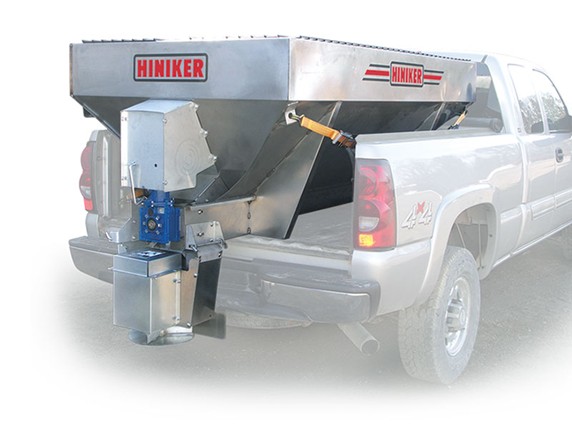
Crews looking at salt & sand spreaders are usually trying to stay flexible. They may handle parking lots one day, gravel lanes the next, and a hill or service yard after that. A spreader that can handle more than one material gives them room to adjust when the storm does not behave.
Why salt spreaders should match the route
The wrong spreader can make simple work feel clumsy. Too small, and the driver is always heading back to refill. Too large, and the truck carries extra weight it does not need. That affects handling, braking, visibility, and how comfortable the operator feels when roads are already bad.
Start with the route. A contractor doing tight commercial lots may care more about control and easy loading than huge capacity. A farm or facility crew may need something that can cover long drives and open yards without stopping. A municipal crew may be thinking about repeat passes and steady flow over a longer shift.
The vehicle matters too. Payload is not a suggestion. A spreader, the material, the plow, the driver, and everything else on the truck all add up. A good setup should feel like it belongs on the truck.
Dealers catch the details buyers miss
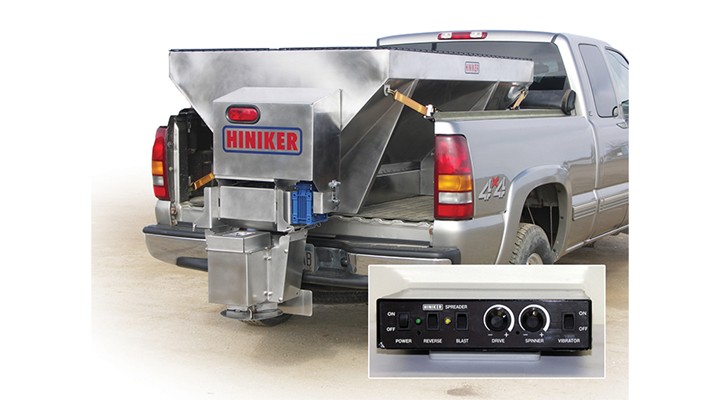
There is a reason experienced crews still talk with salt spreader dealers instead of buying only from a picture and a price. The small details matter. Mounting style, wiring, controller placement, material flow, service access, and parts availability all become very real once the first storm hits.
A dealer can also help spot conflicts in the full setup. Maybe the truck already runs a plow and extra lights. Maybe the bed still needs to haul tools. Maybe the operator needs to remove the spreader between storms. None of those points are dramatic, but they change what equipment makes sense.
Service is part of the decision too. Salt is rough on equipment. Moisture finds wiring. Moving parts wear. If a spinner, motor, harness, or lid needs attention in January, having the right support nearby is worth more than it seemed back in June.
Salt, sand, and blends are not the same thing
Salt helps break down ice when conditions are right for it. Sand gives traction. It does not melt the surface, but it can make a slick area safer to move across. Blends sit somewhere in the middle, which is why they are common around hills, gravel areas, shop yards, and places where trucks need grip before the salt has time to work.
For that kind of work, sand & salt spreaders can make more sense than a unit meant only for dry salt. The feed system has to be able to move heavier material without constant babysitting. The cover has to keep moisture out as much as possible. The operator needs enough control to avoid dumping too much in one place and barely touching another.
Material storage matters more than people like to admit. Covered salt spreads better. Dry sand behaves better. Frozen chunks cause problems no matter how strong the machine is. A few good loading habits can save a surprising amount of frustration.
Tailgate units can be a smart middle ground
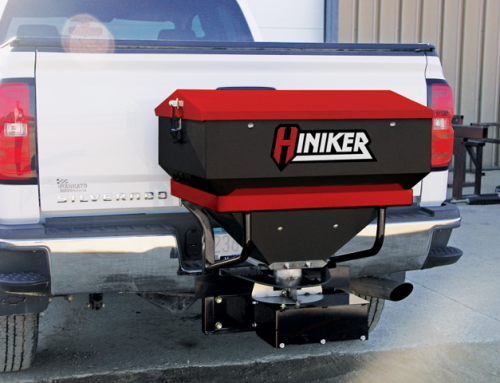
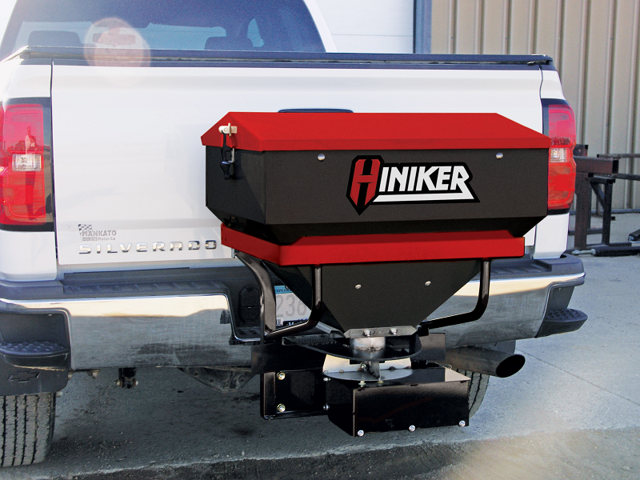
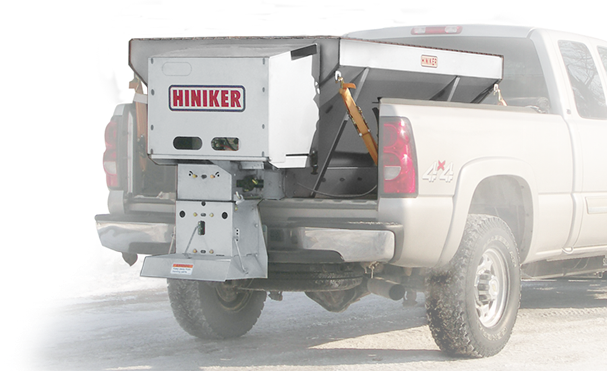
Not every crew needs a big hopper in the bed. Tailgate spreaders can be a practical fit when the truck is already doing several jobs or the route is made up of smaller properties. They are usually easier to store, easier to remove, and less of a commitment than a larger setup.
That does not make them the right answer for everyone. If the route is long or the material demand is high, constant refilling can get old fast. But for many pickup-based operators, a tailgate setup hits a useful balance between capacity and convenience.
The best choice comes from being honest about the work. How often can the driver reload? How much material does a normal storm take? Is the truck used every day, or only when weather comes in? Those answers narrow the options quickly.
Buying for the season after this one
A spreader should be judged by more than how it looks on day one. Winter equipment has to survive vibration, cold, salt, slush, hurried loading, and tired operators. That is why cleaning and maintenance belong in the buying conversation.
Before choosing salt spreaders, ask how easy the unit is to rinse, inspect, store, and service. Look at the parts that are most exposed. Think about whether the operator can see what is happening behind the truck. Ask what happens when something wears out.
It is also worth talking with sand spreader dealers if sand is part of your plan. A spreader that handles dry salt beautifully may not be happy with heavier material. Better to find that out in a conversation than during a storm.
The right spreader will not make winter calm. But it can make the work more predictable: fewer surprises, cleaner routes, and a better shot at staying ahead of the ice.
FAQs
Are salt spreaders only for contractors?
No. Contractors use them often, but they also make sense for farms, campuses, municipalities, commercial properties, and facilities with enough pavement or roadway to maintain.
Can one spreader handle salt and sand?
Sometimes it can. The important part is whether the spreader is designed for the material. Sand and blends feed differently than dry salt, especially when moisture gets into the pile.
How often should a spreader be cleaned?
After every storm is the safest habit. Salt residue is hard on metal, wiring, and moving parts, so a quick cleanup can prevent bigger problems later in the season.
Reach out to us online at Hiniker or contact us today by calling (800) 433-5620 to find out more about the premium snow removal products we offer. We have been a proud Minnesota-based manufacturer since 1995. We offer the highest quality salt & sand spreaders, snow plows, skid steers, truck plows, accessories, and more! 
Our equipment at Hiniker is built to enable the operator to work as efficiently as possible. You can also follow us on Facebook for the latest news regarding Hiniker’s premium equipment and accessories.