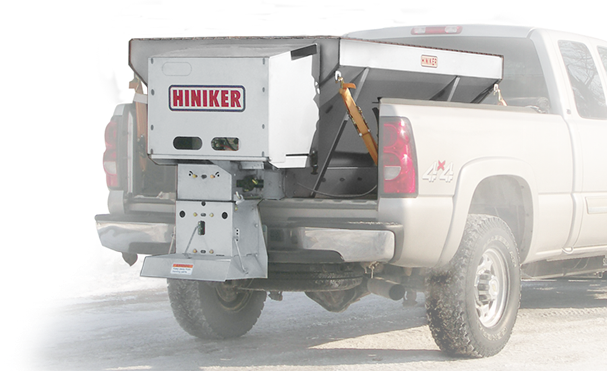
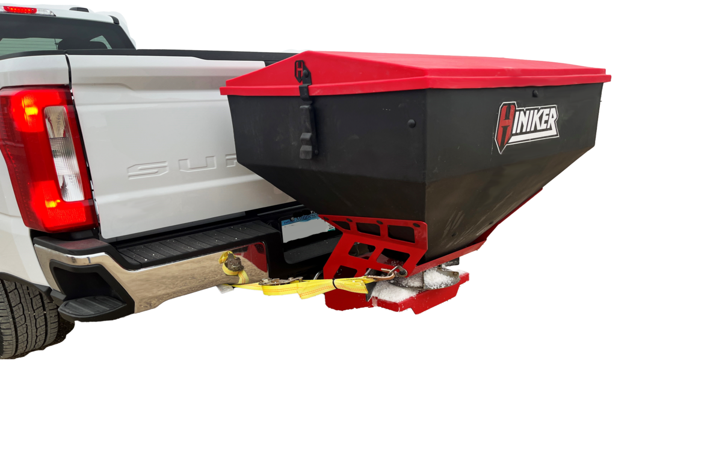
Salt & sand spreaders are worth thinking about before the first slick morning, not after the first customer calls about a frozen entrance. That is usually when a crew finds out whether its winter setup is actually ready. The plow may clear the lot, but the spreader is what helps keep the surface usable after the blade moves on. For a lot of contractors, farms, facilities, and municipal crews, the question is not whether they need to spread material. They already know they do. The harder question is what kind of spreader fits the truck, the route, and the material pile they actually use. Salt behaves one way. Sand behaves another. A blend can be helpful, but only if the equipment can feed it without constant poking, shaking, or stopping.
A good spreader does not turn winter work into a clean little checklist. Storms are too messy for that. But it can make the work less jumpy. Fewer return trips. Less wasted material. Better traction in the areas people keep using, even when the weather keeps changing its mind.
Start with what you are spreading
Material is the first decision because it affects almost everything else. Dry salt usually moves through a spreader more easily than damp salt. Sand is heavier, more stubborn, and less forgiving when it picks up moisture. Mixed material can be useful, especially around hills, gravel lanes, loading areas, and rural drives, but it asks more from the feed system. That is where Hiniker comes into the picture. Crews that use both materials need equipment built for more than ideal conditions. Nobody loads perfect material every time in January. Sometimes the pile has crust on it. Sometimes the salt is damp. Sometimes the sand is colder than expected and does not want to move.
The spreader should be chosen with those real conditions in mind. If the unit only works well when the material is dry, loose, and perfectly stored, it may not be the right fit for a working route.
Why salt & sand spreaders need the right vehicle
The truck is part of the system. It is easy to focus on hopper size and forget payload, rear visibility, electrical capacity, and how the truck handles. A spreader full of material is not light, and winter roads are not the place to find out the setup feels wrong. A pickup running tight commercial lots may need a different unit than a truck covering long drives or open industrial space. Smaller routes often benefit from easier loading and better control. Bigger routes may need more capacity so the operator is not constantly going back to reload.
The best setup feels natural for the driver. Controls are easy to reach. The spread pattern is predictable. The truck still feels balanced. The operator can focus on the route instead of fighting the equipment.
Dealers help sort out the practical stuff
Experienced salt spreader dealers can be useful because they deal with the little details that do not always show up in a product description. Mounting style, wiring, controller location, spinner clearance, storage, and service access all matter once the weather turns bad. A dealer can also help match the spreader to the kind of work the truck already does. Some crews need the bed open between storms. Some need a spreader that comes off without a full production. Some need a setup that works cleanly with a plow, lighting, and other winter gear.
Parts support matters too. Salt is hard on metal. Moisture is hard on wiring. Motors, lids, harnesses, and moving parts all take abuse. If something fails during a busy storm week, having the right help nearby can save a route.
Do not oversize just to feel safe
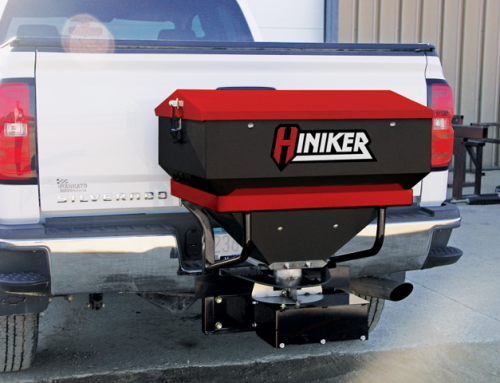
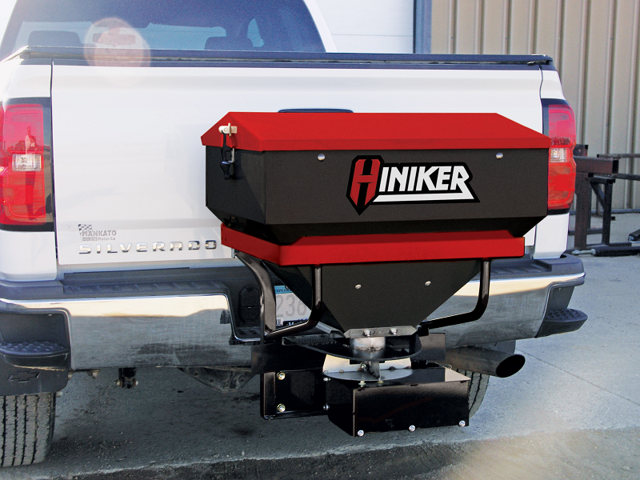
It is tempting to buy the biggest unit that fits the budget. Sometimes that makes sense. Often, though, it adds weight and complexity without solving the real problem. If the route is made of smaller properties, a huge hopper may be more burden than benefit. That is why some operators lean toward tailgate spreaders for pickup work. They can be practical for shorter routes, lighter material needs, and trucks that still have to do other jobs. They are not the answer for every crew, but they can be a smart middle ground when full-bed capacity is not necessary.
Reloading is the honest test. If the driver can reload without losing much time, a smaller setup may work fine. If the route is spread out and every refill burns half an hour, more capacity starts to look a lot better.
Sand changes the conversation
Salt and sand get talked about together, but they do different jobs. Salt helps break the bond between ice and pavement when temperatures allow it. Sand adds grip. It will not melt the surface, but it can make a slick area more passable right away. That is why crews that rely on sand should talk with sand spreader dealers before assuming any spreader will do. Sand can bridge, clump, and feed unevenly if the setup is not meant for it. Damp sand is even less cooperative.
Storage habits help. Covered piles flow better. Breaking up frozen chunks before loading saves headaches. Keeping lids closed keeps moisture out. None of this is glamorous, but it is the kind of basic winter routine that keeps equipment from becoming the problem.
Small details matter during a long storm
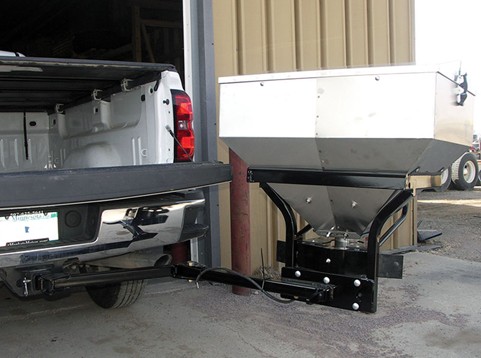
A good spreader is partly about capacity and partly about fatigue. After several hours, simple controls matter. Clear visibility matters. A steady spread pattern matters. So does being able to clean the unit without turning it into a project. Some trucks also do well with a receiver hitch spreader when the route is light and the crew wants a compact setup. As always, the material and route should lead the decision. Convenience is only convenient if the unit can keep up with the work.
Before buying salt & sand spreaders, ask what a normal storm really looks like. How much material gets used? How often does the truck reload? Who runs the equipment? Where will the spreader be stored? What wears out first? The right salt & sand spreaders are not the fanciest ones. They fit the truck, handle the material, and still feel sensible at two in the morning when the route is only half done.
FAQs
Can salt & sand spreaders use both materials at the same time?
Sometimes, yes. Many crews use a blend, but the spreader needs to be built for that kind of material. Sand and damp salt do not feed the same way dry salt does.
Is a bigger spreader always better?
Not always. Bigger capacity can reduce refills, but it also adds weight. For smaller routes, an easier-to-manage setup may be the better choice.
How should material be stored before spreading?
Keep it covered and as dry as possible. Frozen chunks, wet sand, and crusted salt make the spreader work harder and can lead to uneven flow.
Reach out to us online at Hiniker or contact us today by calling (800) 433-5620 to find out more about the premium snow removal products we offer. We have been a proud Minnesota-based manufacturer since 1995. We offer the highest quality salt & sand spreaders, snow plows, skid steers, truck plows, accessories, and more! 
Our equipment at Hiniker is built to enable the operator to work as efficiently as possible. You can also follow us on Facebook for the latest news regarding Hiniker’s premium equipment and accessories.