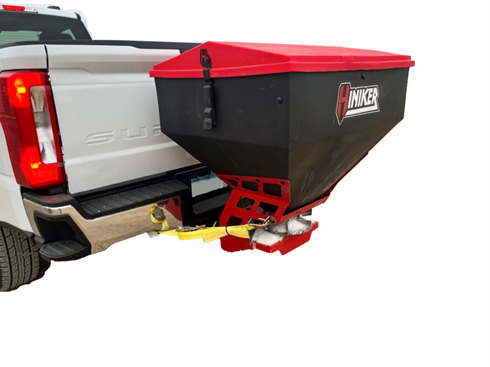
Tailgate spreaders are a practical choice when you need ice control without giving up the whole truck bed to a larger hopper. They are common with smaller contractors, property managers, farms, schools, and maintenance crews that need to treat pavement but still use the truck for other work.
The appeal is easy to understand. A tailgate unit is usually easier to install, easier to remove, and easier to store than a larger setup. But that does not mean every buyer should choose one. The right fit depends on the truck, the material, and how much ground you need to cover between reloads.
Start with the route, not the catalog
Before comparing models, think about your actual winter route. How many stops do you make? Are the lots tight or open? Do you treat only after plowing, or do you make extra ice-control trips when temperatures drop? Do you have a place to reload nearby?
A smaller setup can be a great fit for short routes. It can also become frustrating if the driver has to refill it over and over during a storm. That is the part to be honest about. A tailgate spreader dealer can help you sort that out by looking at the truck and the route together.
Think about the material
Dry bagged salt is usually easier to spread than damp bulk salt. Sand and salt blends can be heavier and more stubborn. If you use whatever material is available when the storm hits, say that before buying. The feed system matters. The spinner matters. So does the way the material is stored. A unit that handles one material well may not love another.
Sand spreader dealers can be helpful when you need to understand whether a unit is built for salt only, sand, or a blend. That conversation is worth having before the season starts.
Why tailgate spreaders are popular for pickups
Pickups are already doing a lot of winter work. They plow, haul, travel between sites, and sometimes carry tools or bags of material. A tailgate unit adds spreading ability without making the truck feel completely dedicated to one job.
That flexibility matters for smaller operations. You may need the same truck for summer work, towing, or general maintenance. A spreader that comes off without a full afternoon of work can be a real advantage. Just do not ignore loaded weight. Material adds up fast, and the truck still has to drive safely.
Controls and spread pattern matter
The driver should be able to adjust the spread without guessing. A lot of material in the wrong place is just wasted money. Too little material leaves slick pavement behind. A clean, predictable spread pattern makes the route feel less rushed.
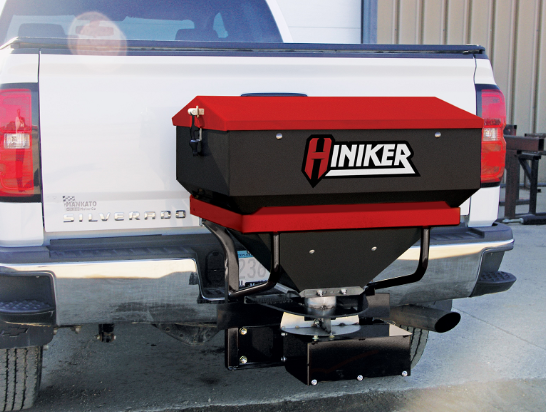
Receiver hitch spreader setups may also be worth looking at if you want something simple and removable for lighter use. The best choice depends on how much material you need and how often the unit will be used. The point is not to buy the fanciest controls. It is to buy controls the driver can use easily in bad weather.
Maintenance should be part of the buying decision
Salt is tough on equipment. It gets into corners, wiring, moving parts, and hardware. If the spreader is hard to clean, it may not get cleaned well. That can shorten its life fast.
Ask how the unit rinses out. Ask what parts wear most often. Ask how easy it is to remove the spinner or inspect the feed area. If you have to fight the unit every time you clean it, that will get old quickly. Tailgate sanders should be judged partly on how they work after three storms, not just how they look new.
Choosing with fewer regrets
A good tailgate setup fits the route without overcomplicating the truck. It should be large enough to be useful and small enough to stay practical. It should spread the material you actually use and clean up without turning into a job of its own.
When tailgate spreaders are matched well, they make winter work feel simple. Load, spread, rinse, repeat. That is exactly what many crews need. If the route grows, you can always compare larger options later. For the right buyer, though, a tailgate unit is not a compromise. It is the right tool.
FAQs
Are tailgate units good for commercial snow work?
Yes, especially for smaller lots and lighter routes. Large routes may need more capacity.
Can tailgate spreaders handle bulk salt?
Some can, depending on the unit and the condition of the material. Damp bulk salt can be harder to move.
Do I need a special truck?
Not always, but you do need to check payload, hitch or mount requirements, wiring, and loaded weight.
Reach out to us online at Hiniker or contact us today by calling (800) 433-5620 to find out more about the premium snow removal products we offer. We have been a proud Minnesota-based manufacturer since 1995. We offer the highest quality salt & sand spreaders, snow plows, skid steers, truck plows, accessories, and more!

Our equipment at Hiniker is built to enable the operator to work as efficiently as possible. You can also follow us on Facebook for the latest news regarding Hiniker’s premium equipment and accessories.