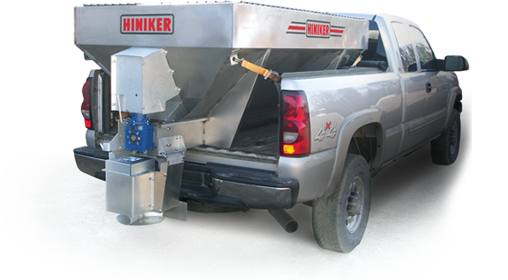
Receiver hitch spreader setups make sense for people who want ice control without committing to a larger truck-mounted hopper. They are often used by smaller contractors, property owners, maintenance crews, and businesses that need to treat pavement but do not want a complicated setup sitting on the truck all winter.
The appeal is not hard to understand. A hitch-mounted spreader can be easier to install, easier to remove, and easier to store. It can give one truck more winter usefulness without making the whole operation feel oversized. But the right fit depends on the route. If the work is too heavy, too spread out, or too material-hungry, the convenience may not be enough.
Start with the kind of work you do most
A light route is very different from a heavy one. If you are treating small lots, shop entrances, residential drives, sidewalks near a building, or a few predictable stops, a smaller setup may be just right. It keeps the truck flexible and usually makes winter prep less of a chore.
If you are covering big parking lots or a long list of commercial properties, capacity starts to matter more. Reloading can become the weak point. Every trip back to the shop costs time, and time is not something you have much of when temperatures are dropping.
When having conversations with salt spreader dealers, you should discuss the route, not just the equipment. The best spreader is the one that fits the work you repeat over and over.
Material can make or break the setup
Salt, sand, and blends do not all behave the same. Dry bagged salt is usually easier. Bulk salt can be damp. Sand is heavier. Salt-sand mixes may bridge or clump if the spreader is not built for that kind of material.
That is why it is worth being honest before you buy. If you use only dry salt, say that. If your material sits outside or comes from a bulk pile, say that too. No one wins when a spreader gets matched to perfect material and then has to work with the real stuff in January.
A dealer that carries salt & sand spreader accessories may also help with practical pieces like covers, mounts, and controls that make the unit easier to use through a long season.
Why a receiver hitch spreader can be easier to live with
The big benefit is flexibility. You can treat pavement when you need to, then remove the unit when the truck has other work to do. For businesses that use one pickup for everything, that matters.
Storage is usually simpler too. A smaller spreader is easier to tuck away than a large hopper. That can be a big deal for shops without much extra space.
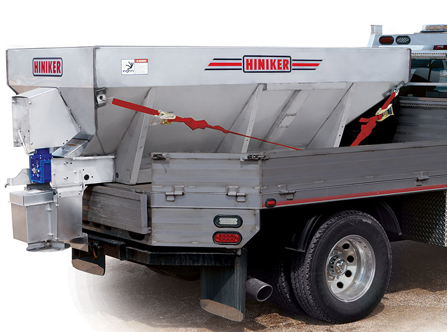
Still, convenience has limits. You need to check hitch rating, loaded weight, and how the truck handles with the unit mounted. A spreader hanging behind the truck changes the feel of the vehicle, especially in slick conditions.
Controls should not slow the driver down
Good controls are easy to understand. The driver should be able to adjust the rate and spread pattern without taking attention away from the lot. That is especially important in tight places with curbs, parked cars, and walkways nearby.
Material waste is another reason controls matter. Throw too much and you burn through salt. Throw too little and slick spots stay behind. A steady pattern gives the driver confidence and helps keep the route predictable.
A sand spreader used for lighter work still needs that same basic control. Small does not mean careless. It just means the setup is matched to a smaller job.
Ask about cleaning before you care about shine
New spreaders always look clean. They do not stay that way. Salt dust, slush, grit, vibration, and rushed storm cleanups are hard on equipment. The easier a unit is to rinse and inspect, the more likely it is to last.
Look at the spinner area. Look at wiring. Look at the hopper shape. Ask where material tends to collect. Ask how common wear parts are replaced.
A tailgate spreader dealer should be willing to talk through maintenance in normal language. If the answer is too vague, keep asking. The cleanup routine is part of ownership.
Comparing receiver hitch spreader options
When you compare models, skip the fantasy version of your winter route. Use the real one. How often do you reload? What material do you actually use? Where will the unit be stored? Who will mount it? How quickly can you get parts?
Those questions matter more than a tiny difference in capacity or a feature you may never touch. Winter equipment earns its keep by being ready, simple, and dependable.
A hitch-mounted setup is not for every crew, but when it fits, it fits nicely. It gives a truck enough spreading ability without taking over the whole operation.
A practical final check
Before you buy, make sure the spreader fits the truck, the route, the material, and the storage situation. If one of those pieces feels forced, pay attention. Winter has a way of exposing weak spots quickly.
The right receiver hitch spreader should feel useful, not fussy. It should help you treat pavement safely without adding a pile of extra work. That is the point.
And if you are comparing salt & sand spreaders, do not let size make the whole decision. Fit matters more.
FAQs
Who should buy a receiver hitch spreader?
It is a good option for lighter routes, small lots, private properties, and buyers who want seasonal flexibility.
Can one truck plow and spread with this setup?
Usually, yes, as long as the truck is rated for the full load and the setup is installed properly.
Is a receiver hitch spreader enough for a large route?
Sometimes not. If you need high capacity and fewer reloads, a larger hopper may be the better fit.

Reach out to us online at Hiniker or contact us today by calling (800) 433-5620 to find out more about the premium snow removal products we offer.
We have been a proud Minnesota-based manufacturer since 1995. We offer the highest quality salt & sand spreaders, snow plows, skid steers, truck plows, accessories, and more!
Our equipment at Hiniker is built to enable the operator to work as efficiently as possible. You can also follow us on Facebook for the latest news regarding Hiniker’s premium equipment and accessories.