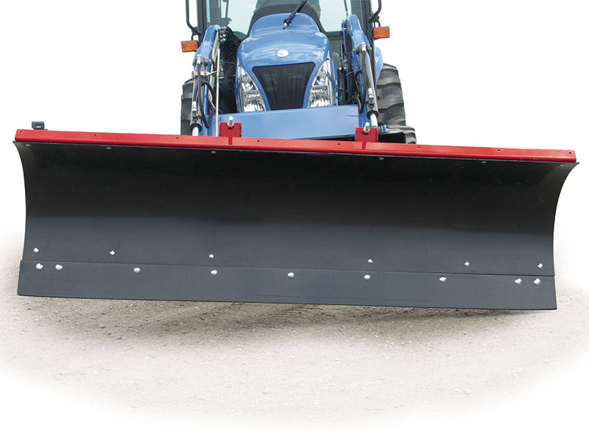
Tractor snow plow sizing starts with the tractor, not the width of the driveway or lot. Owners naturally want to cover as much ground as possible with every pass. The trouble is that a blade can be wide enough to look productive and still be too heavy, too awkward, or too demanding for the machine carrying it. When that happens, steering gets vague, traction disappears, and the operator spends more time correcting the tractor than moving snow.
The right width clears the tractor’s tire path when angled, fits through the narrowest places on the route, and stays within the machine manufacturer’s limits. Weight, mounting position, front axle capacity, hydraulics, ballast, tire setup, and snow type matter just as much. There is no honest one-size answer based only on horsepower.
Measure the Tractor Before Measuring the Blade
Start with the outside width of the rear tires. A plow that barely matches this measurement when straight may become too narrow once angled, leaving the tires to pack snow along one side. That packed strip is harder to remove later and can pull the machine sideways. Ask for the blade’s effective clearing width at normal working angles, not only its overall width.
Next, record the tractor model, loader model, rated capacities, axle limits, hydraulic specifications, tire configuration, and any installed cab or weights. The manual may set restrictions that are not obvious from the loader’s lift rating. Lift capacity measured at one point does not automatically equal the amount of plow weight the tractor can safely carry far ahead of the axle.
Snow plow blades for tractors should be matched using the complete machine configuration. A dealer needs more than a photograph and an estimate of horsepower to make a responsible recommendation.
How Wide Should a tractor snow plow Be?
There is a practical range between too narrow and too wide. Too narrow leaves tire tracks and adds passes. Too wide increases leverage, catches more snow, and may overpower traction in heavy conditions. It can also make gates, parked cars, fuel islands, and narrow storage areas difficult to navigate.
Route layout decides where inside that range the machine belongs. A tractor clearing long, open lanes can use width differently from one working around apartments or farm buildings. Do not size the entire setup around the easiest section of the property. Find the narrow pinch points and the deepest likely drifts. Those are usually where an oversized blade becomes obvious.
Snow conditions change the answer too. Six inches of dry snow is not the same load as wet spring snow or the compacted ridge left by a road plow. Operators need the option to take a smaller bite instead of forcing a full-width push every time.
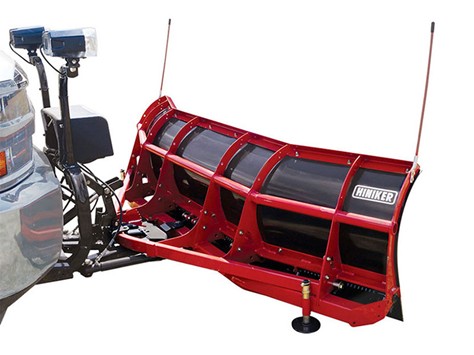
Weight Changes the Way the Tractor Behaves
Blade weight is carried forward of the tractor, which gives it leverage over the front axle and takes useful weight away from the rear. Proper ballast restores balance and improves traction, but ballast must follow the tractor and loader manufacturer’s instructions. A random heavy object on the three-point hitch is not a careful ballast plan.
An oversized tractor snow plow can feel manageable when raised in the yard and entirely different once it is full of wet snow.
Keep the blade low during transport and travel at a speed appropriate for the surface. A raised attachment lifts the center of gravity and can reduce stability, especially on slopes or uneven ground. Four-wheel drive helps the tractor move; it does not erase axle ratings or improve braking beyond the available traction.
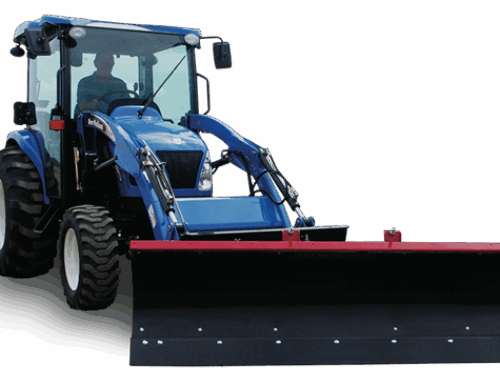
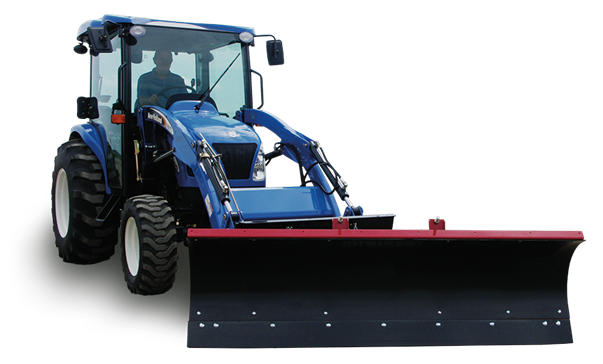
A tractor loader snow plow also needs a secure attachment system. Confirm the carrier, locking points, hydraulic connections, and any electrical functions are approved and fully engaged. After connecting, raise the blade only enough to verify the lock before beginning work.
Plowing Style Matters More Than the Brochure Suggests
An angle blade is useful for rolling snow off a lane and building a windrow. A scoop plow can help carry material and limit spill-off when snow needs to be moved toward a specific stack. The better choice comes from the route. Long drives, open lots, cramped courtyards, and loading areas do not reward the same blade behavior.
Plan where snow will end up before the first push. Leave room for later storms, keep piles away from intersections and drainage paths, and avoid stacking where meltwater will cross a walkway and refreeze. If snow must be lifted high or moved after piles harden, a bucket or loader may still be needed. A plow is excellent at moving snow across pavement, but it is not the only winter tool.
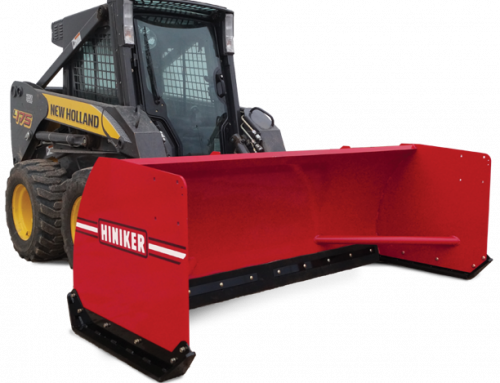
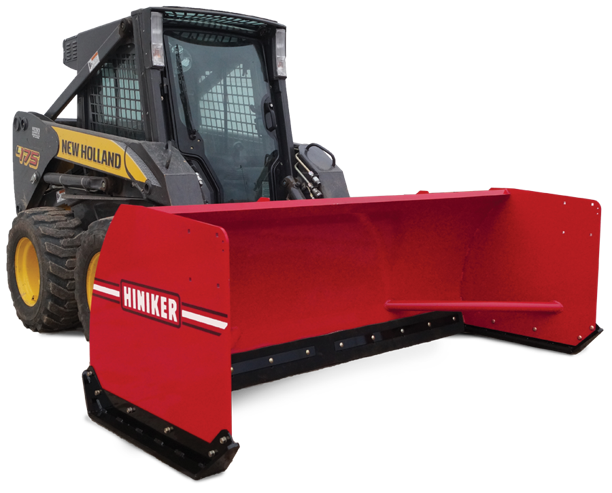
The same distinction shows up with loader snow plows and skid steer snow pushers. Larger equipment can move more material, yet it still needs enough traction, capacity, maneuvering room, and a sensible place to put the load.
Hydraulics and Trip Protection Are Not Minor Details
Confirm the tractor can supply the flow and pressure required by the plow. Couplers should match, hoses should have enough length through the full movement range, and routing should keep them away from pinch points and hot surfaces. A hose stretched tight at full angle will eventually make its complaint known.
Trip protection matters on gravel drives and paved sites alike. Frozen ruts, raised utility covers, curbs, and buried objects can stop a cutting edge suddenly. Understand whether the entire blade trips or only the edge, how it resets, and what maintenance the mechanism requires. Skid shoes and cutting-edge choices can also change how aggressively the blade follows the surface.
A Good Match Feels Uneventful
The best tractor snow plow setup does not call attention to itself. The tractor steers predictably, the blade covers the tire path, the hydraulics respond normally, and the operator can work without constantly fighting wheel spin or front-end weight. That calm behavior is the result of correct sizing, ballast, attachment, and technique.
Bring the tractor’s complete information to the dealer and describe the worst parts of the route, not just its total square footage. A recommendation based on actual machine limits and real obstacles will be more useful than buying the widest blade the loader can lift in the yard.
FAQs
Can a compact tractor handle a commercial snow plow?
It can when the plow is approved for the tractor and loader configuration. Width alone is not the deciding factor. Installed weight, axle capacity, hydraulics, ballast, traction, mounting, and the properties being cleared all need to fit.
Is a wider plow faster on open pavement?
Sometimes. It covers more surface per pass, but only if the tractor can maintain traction and control with a loaded blade. In heavy snow, a slightly narrower setup that keeps moving may finish sooner than a wide blade that repeatedly loses traction.
Does a tractor snow plow require rear ballast?
Many setups do, but the correct amount and placement come from the tractor, loader, and plow manufacturers. Proper ballast supports steering and traction while keeping the machine within its limits. Do not estimate it by feel.

Reach out to us online at Hiniker or contact us today by calling (800) 433-5620 to find out more about the premium snow removal products we offer. We have been a proud Minnesota-based manufacturer since 1995. We offer the highest quality salt & sand spreaders, snow plows, skid steers, truck plows, accessories, and more!
Our equipment at Hiniker is built to enable the operator to work as efficiently as possible. You can also follow us on Facebook for the latest news regarding Hiniker’s premium equipment and accessories.